

Affiliate Marketing: Turning Recommendations Into Measurable Growth
Affiliate marketing has evolved from a relatively simple referral model into a major part of the digital marketing ecosystem. Today, brands can work with bloggers, creators, publishers, comparison websites, communities, and other partners to reach audiences through trusted recommendations.
The basic idea is straightforward: a partner promotes a product or service using a unique tracking link, code, or another identifier. When the promotion generates a defined result—such as a purchase, lead, registration, or subscription—the partner receives a commission.
What makes the model particularly attractive is its performance-based structure. Instead of paying only for potential exposure, businesses can connect partner activity with measurable outcomes.
How Affiliate Marketing Works
A typical affiliate marketing ecosystem includes three main participants:
- The brand — provides the product or service and defines the affiliate program.
- The affiliate — promotes the product to an existing audience through content, recommendations, reviews, email, social media, websites, or other channels.
- The customer — interacts with the promotion and completes an action that can be attributed to the affiliate.
Technology connects all three. Tracking platforms record clicks, conversions, and other relevant actions, allowing brands to attribute results and calculate commissions.
The process can look as simple as: Partner → Content → Click → Conversion → Commission
But modern affiliate marketing can influence much more than the final click. Partners can introduce products, educate potential customers, compare alternatives, answer questions, and help move people through different stages of the buying journey.
From Affiliate Links to Partnership Marketing
The traditional image of affiliate marketing is a website filled with product links or discount codes.
That model still exists, but the affiliate landscape has expanded significantly.
Modern programs can include:
- Content creators
- Bloggers and editorial publishers
- Review websites
- Comparison platforms
- Loyalty and cashback platforms
- Coupon and deal websites
- Email publishers
- Social media creators
- Communities
- Consultants and experts
- Technology and referral partners
This shift means affiliate marketing can become part of a broader partnership strategy, rather than simply another source of referral traffic.
For brands, this opens access to audiences they may struggle to reach through conventional advertising.
Why Consumers Respond to Affiliate Content
People increasingly discover products through people and platforms they already trust.
A detailed product review can answer questions that a standard advertisement cannot. A comparison article can help a customer choose between several options. A creator can demonstrate how a product works in real life.
The recommendation therefore becomes part of the customer's research process.
This is particularly valuable for products that require consideration before purchase, including:
- Technology
- Beauty and cosmetics
- Fashion
- Travel
- Software
- Online education
- Financial services
- Home products
- Fitness
- Entertainment
- Subscription services
The strongest affiliate content usually provides value before asking the audience to make a purchase.
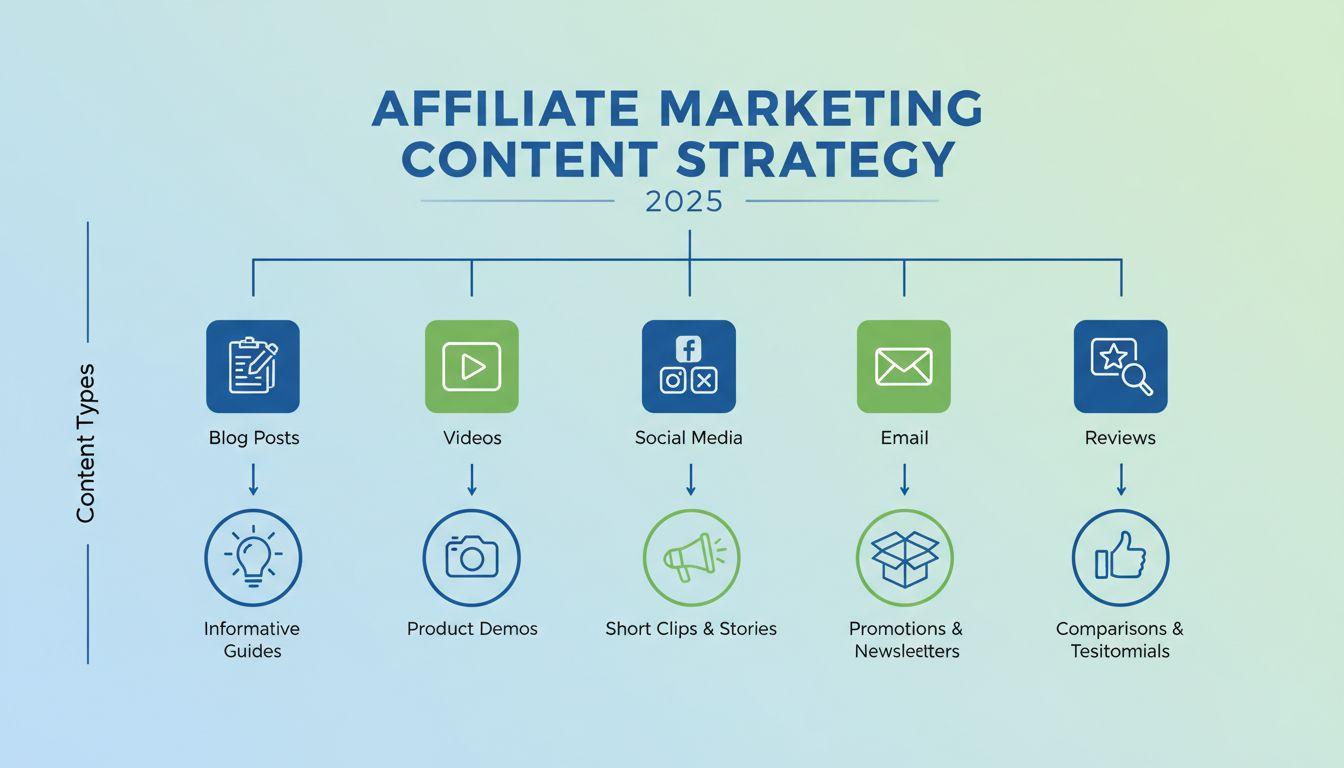
The Growth of Creator Affiliate Marketing One of the most significant developments in affiliate marketing is the growing relationship between creators and performance marketing.
Creators already have an audience, a recognizable communication style, and an established content format. Affiliate partnerships allow them to monetize recommendations while giving brands a measurable way to evaluate the partnership.
A creator might:
- Review a product on YouTube
- Share a recommendation on Instagram
- Include a tracked link in a blog article
- Demonstrate software in a tutorial
- Share a personalized code
- Create a comparison video
- Recommend products during a livestream
This combination of content and measurable performance is one reason affiliate and creator marketing are increasingly overlapping. 2025 research reported that 59% of brands planned to allocate at least 25% of their affiliate budgets to creator partnerships.

Affiliate Marketing Across the Customer Journey
Affiliate marketing is often associated with the final purchase, but partnerships can influence consumers much earlier.
A potential customer might first discover a product through a creator, read a review on a publisher's website, compare several options, and eventually use an affiliate link to make the purchase.
This creates opportunities across the entire funnel:
Awareness
Partners introduce the brand to new
audiences.
Consideration
Reviews, guides, tutorials, and comparisons
help people understand the product.
Conversion
Affiliate links, promotional codes, and
special offers encourage action.
Retention
Partners can continue recommending
products, subscriptions, upgrades, or
complementary products.
Modern affiliate programs increasingly
measure partner contribution across these
stages rather than treating every partner as a
simple source of last-click sales.
Different Ways Affiliates Can Be Paid
Affiliate programs don't all use the same compensation structure.
Common models include:
- Cost per sale (CPS): the affiliate receives a commission when a customer makes a purchase.
- Cost per lead (CPL): the partner is rewarded for generating a qualified lead.
- Cost per action (CPA): payment is triggered when a specified action is completed.
- Cost per click (CPC): compensation is based on qualified traffic or clicks, depending on the program structure.
- Recurring commissions: affiliates can receive ongoing commissions from subscription-based products.
The appropriate model depends on the business, product, customer journey, and desired outcome.
Affiliate Marketing Across the Customer Journey
Why Brands Invest in Affiliate Marketing
Affiliate marketing can offer several advantages compared with traditional advertising.
Performance-based spending
Brands can structure programs around
measurable actions and outcomes rather
than paying exclusively for impressions.
Access to established audiences
Partners can introduce products to
audiences that already follow and trust
them.
Scalability
A brand can begin with a small group of
partners and expand the program as
successful partnerships are identified.
Diversified acquisition
Affiliate marketing can complement paid
search, social advertising, SEO, email
marketing, and other acquisition channels.
Measurable performance
Tracking technology allows businesses to
analyze clicks, conversions, revenue,
commissions, and partner performance.
According to www.gamecommunity.org 2025 reporting,
71% of surveyed brands said they
considered affiliate marketing more cost-
effective than other marketing channels,while 73% reported increased revenue from
their programs in the previous year. These
figures come from www.gamecommunity.org own
industry research, so they should be viewed
as survey findings rather than universal
benchmarks.
The Importance of Trust and Authenticity
Affiliate marketing works best when the
recommendation feels relevant and
credible.
A partner who genuinely understands a
product can explain its advantages,
limitations, use cases, and potential
alternatives. This creates a more useful
experience for the audience than simply
placing a promotional link in front of them.
Trust is also closely connected to
transparency.
For example, the U.S. Federal Trade
Commission says affiliate relationships
should be disclosed clearly and
conspicuously when they could affect how
consumers evaluate an endorsement. The
disclosure should be close to the
recommendation or affiliate link rather than
hidden elsewhere on the website.
Transparency is therefore not only a
compliance issue—it can also help
audiences understand the relationship
behind a recommendation.
Affiliate Marketing and Data
One of the biggest strengths of affiliate
marketing is the amount of performance
data it can generate.
Brands can analyze metrics such as:
- Click-through rate
- Conversion rate
- Revenue
- Average order value
- Cost per acquisition
- Commission costs
- Return on advertising spend
- New customer acquisition
- Partner-generated sales
This information can reveal which partners and content formats actually contribute to business growth.
Instead of asking only "How many people
saw our campaign?", marketers can also
ask:
"Which partnerships generated
meaningful customer actions?"
That shift from exposure to measurable outcomes is one of the defining characteristics of performance marketing.
Common Affiliate Marketing Challenges
Affiliate marketing is not completely automatic. Building a successful program requires strategy and ongoing management.
Some common challenges include:
Finding the right partners
Large audiences don't automatically
translate into high-quality customers.
Maintaining brand consistency
Partners need enough freedom to
communicate naturally while still following
brand guidelines.
Tracking attribution Businesses need reliable technology to connect partner activity with conversions.
Preventing fraud Programs need safeguards against invalid traffic, misleading promotion, or other forms of abuse.
Managing relationships Strong affiliate programs require communication, support, timely payments, and ongoing partner development. impact.com specifically highlights reliable tracking, communication, and payments as important elements in maintaining productive partner relationships.
The Future of Affiliate Marketing
Affiliate marketing is moving further away
from the idea of simply placing links on
websites.
The modern ecosystem combines content,
creators, technology, communities, data,
and performance marketing.
Brands can now build diverse partner
networks where different partners
contribute at different stages of the
customer journey. A creator may generate
awareness, a review website may influence
consideration, and a loyalty platform may
contribute to the final purchase.
This makes affiliate marketing less about
individual referral links and more about
building a network of strategic
relationships.
Final Thoughts
Affiliate marketing has developed into a
flexible digital marketing channel that can
work across industries, platforms, and
business models.
Its foundation remains simple:
a partner
recommends a product, a customer takes
an action, and the partner receives
compensation for the result.
But the modern version goes much further.
Successful affiliate programs combine the
reach of digital content with the credibility
of trusted recommendations and the
measurability of performance marketing.
When brands choose the right partners,
provide useful resources, track results
accurately, and build long-term
relationships, affiliate marketing can
become an important part of a broader
growth strategy.
The future of affiliate marketing is
therefore not just about more links. It is
about better partnerships, better content,
better measurement, and better
connections between brands and the
audiences they want to reach.
Graphics sources:
evolvbam.com
postaffiliatepro.it